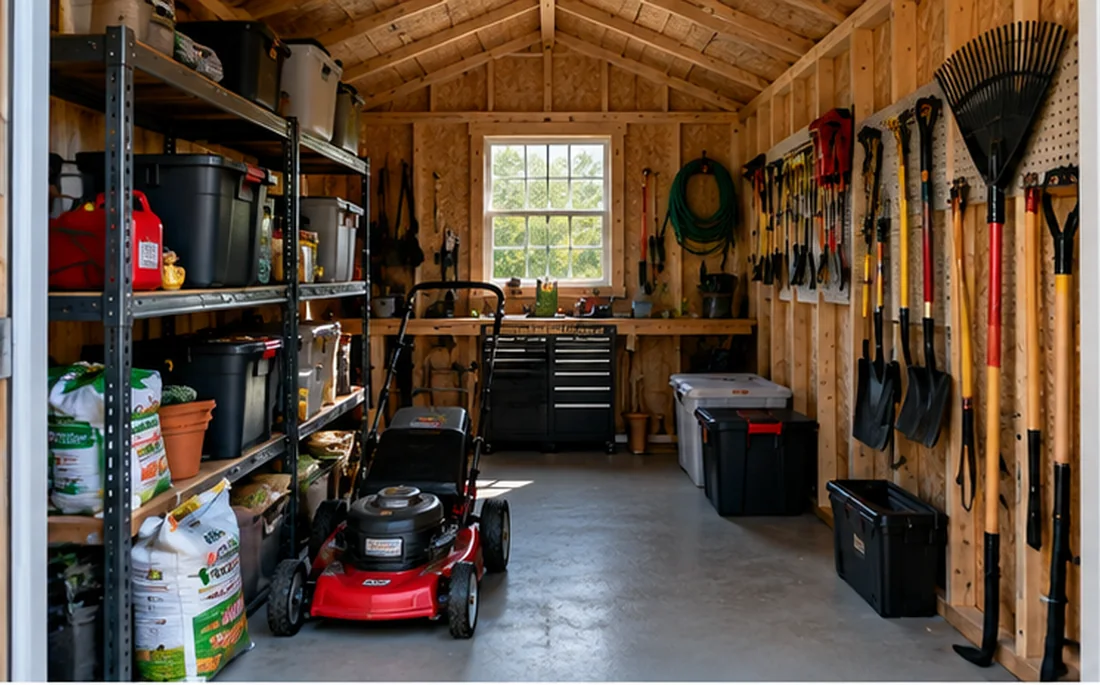
A shed’s nominal footprint gets most of the attention, but the door determines what can actually enter. Many disappointing purchases happen because the listing shows wide-looking double doors without stating the true clear opening. Start the comparison with your bulkiest object.
Measure the object as it moves
Record width, height, and length of the mower, bicycle, wheelbarrow, kayak, or furniture as you would roll or carry it. Include handles, wheels, guards, and attachments. For a riding mower, check whether the discharge chute folds and whether it changes the usable measurement. Measure the actual object rather than relying only on a brochure specification for a different configuration.
Ask for the clear opening
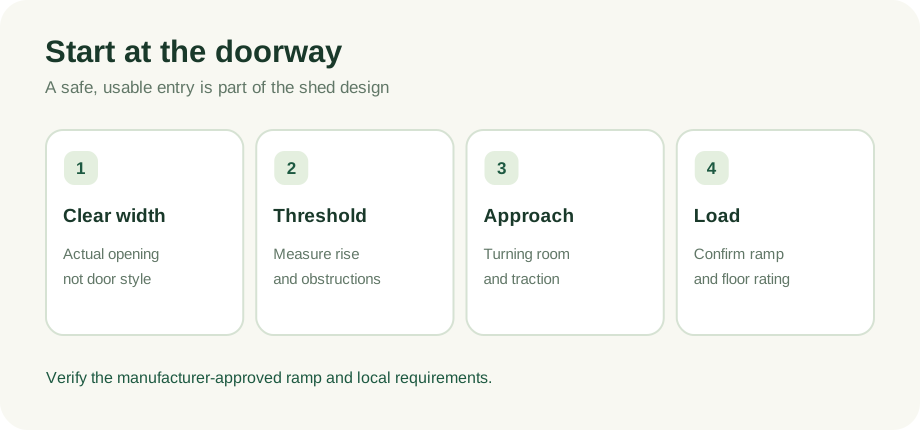
An advertised pair of doors can be wider than the unobstructed opening between door stops and hinges. Confirm how far each door swings, whether there is a fixed center post, and how much width remains with the doors secured open. Compare the door height at the lowest overhead obstruction, not the roof peak. Avoid selecting a fit with no working margin for steering or carrying.
Account for the route on both sides
A mower may pass through a door but require a sharp turn immediately inside; a bicycle may fit only if its handlebars rotate. The yard side needs room for the doors to open without hitting a fence, tree or raised bed. At the threshold, consider the height step, ramp approach, wet-weather traction, and whether the shed maker allows the loading method you have in mind.
Match door style to everyday use
Double hinged doors provide a large opening on many models, but both leaves need a place to swing. Sliding doors may help in tight yards, but their tracks and usable opening vary. A personnel door makes quick tool retrieval easy, yet is not automatically wide enough for large equipment. More doors can reduce continuous wall space for shelving, so plan the internal layout at the same time.
Build a one-page doorway test
Draw the proposed door at scale and draw your largest item at the same scale. Mark the outside approach, the interior turn, and the shelf or wall beside the opening. The test can reveal an unusable arrangement before you spend money or pour a foundation.
Do a dry run with masking tape
Mark the proposed clear opening on a wall or between two objects, using the manufacturer's verified dimension. Wheel or carefully carry your largest item through the imaginary opening, including its operating attachments. If it fits only when every inch is used, the real job may be frustrating once door hardware, ramps, and nearby landscaping come into play. Leave enough space for ordinary movement.
A second useful test is to tape the inside footprint and mark shelves, mower parking and door swing. You may discover that moving the doorway within the design is more useful than selecting a larger shed.
Buyer / homeowner checklist
- Measure the widest operating configuration of the largest item.
- Request manufacturer clear-opening width and height.
- Check threshold height and ramp compatibility.
- Verify both door leaves can fully open at the site.
- Leave handling room inside the entrance.
Questions to bring to a seller or installer
A useful comparison begins with current written specifications for exact model numbers. Put all contenders in one worksheet and do not replace missing specifications with guesses. A good answer identifies the product, base, and included services, rather than offering a generic sales assurance.
- What is included in the base product?
- Which delivery and installation services are excluded?
- What documentation supports the claims?
- What is the full project cost and ongoing responsibility?
For every answer, note the model number, the source of the specification, the date you obtained it, and whether it was confirmed in a current installation manual or supplier quote. This makes the comparison more useful if prices or terms change before you purchase.
Frequently asked questions
Are double doors always better than single doors?
No. Double doors are useful for bulky equipment, but a single door may offer better wall space and simpler daily access for smaller items.
Can I widen the doors after purchasing?
Modifying doors or structural frames may undermine the shed design and warranty. Choose the required opening before buying.
Next step: compare complete specifications
Before committing, place at least two suitable models side by side. Note interior dimensions, actual doorway, floor construction, permitted foundation, anchoring, delivery terms, and warranty exclusions. Where specifications or prices are missing, contact the seller for the current written information. If work involves structural changes, power, or local approvals, consult the appropriate qualified professional.
We have not hands-on tested products or inspected customer installations for this article. Product specifications and applicable building rules must be checked with current manufacturers and local authorities. Retailer links elsewhere on this site are direct links until affiliate approvals are confirmed.
Read our editorial policy ↗