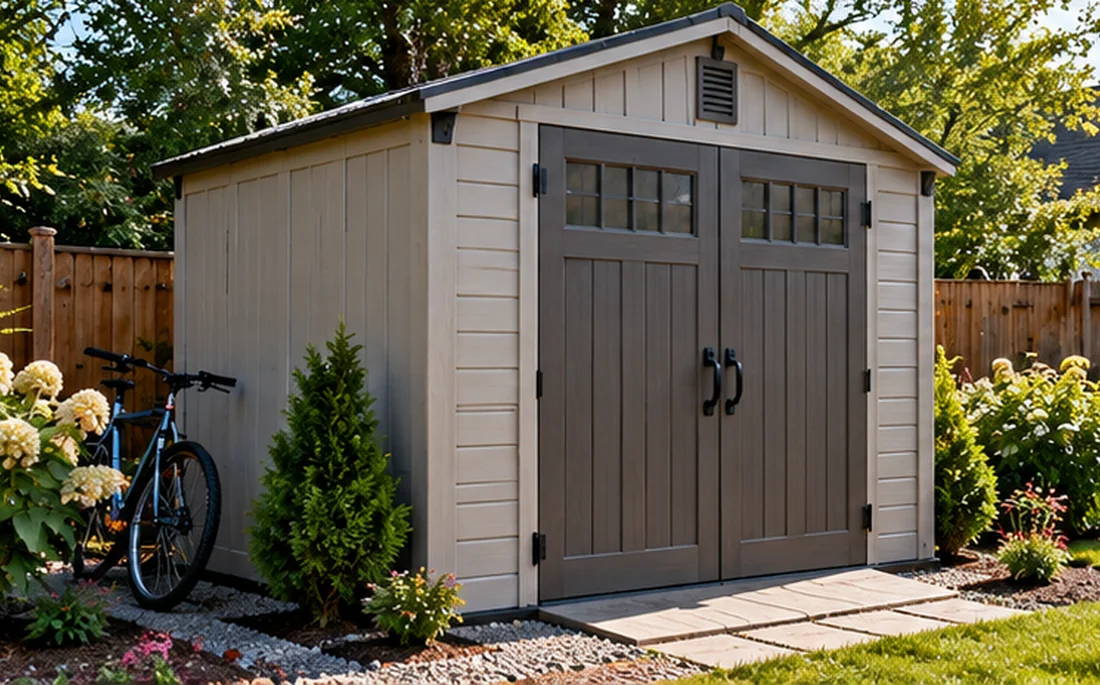
Resin sheds can be an easy-care solution for garden gear, bikes, and seasonal storage. But the pleasant product photo does not tell you whether your mower fits through the opening or whether the box includes a usable floor. This checklist separates the aesthetic choice from the everyday operating details.
1. Confirm usable interior space
The dimensions in a title usually refer to an approximate exterior footprint. Wall thickness, corner framing, sloping roofs, and molded shelves reduce the space where objects can actually sit. Find the floor’s clear interior width and depth, then measure the items you plan to store. An 8-foot-wide nominal shed may have substantially less usable width. Include room for walking rather than assuming every square inch can be filled.
2. Measure the actual door opening
Door width deserves its own line on your comparison sheet. Check the clear opening when both leaves are fully open, the threshold height, and whether the doors can swing freely in the yard. An object that technically fits inside may still be awkward to push across a raised threshold or turn around once inside. For riding equipment, compare the widest part of the machine with the clear doorway, allowing comfortable handling clearance.
3. Read the floor and foundation instructions
Some resin models include interlocking floor panels; others require a separate base. Even when a floor is included, it does not eliminate the need for a properly prepared and level foundation. Check whether the manufacturer approves concrete, compacted gravel with a frame, or another base. A flexible base can cause misaligned doors and poor panel fit. Also confirm the floor’s load limit before rolling in heavy equipment.
4. Anchor for your actual conditions
A lightweight-looking storage shed still needs a manufacturer-approved anchoring system where required. Ask what anchors or brackets are included, which are separate, and how the method changes for gravel versus concrete. Confirm local wind, exposure, and building requirements with the relevant authority. Never assume a retailer’s general product description replaces the installation manual for your specific model.
5. Think about heat, humidity, and serviceability
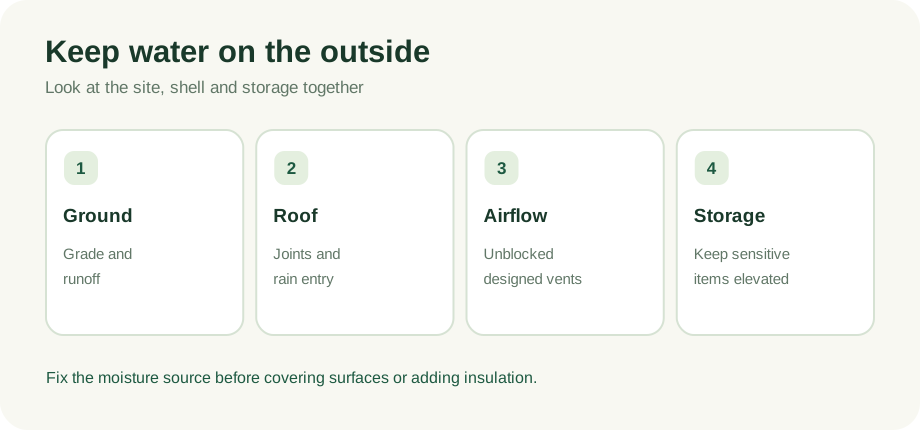
Resin is not automatically condensation-proof. A tightly closed shed with damp equipment can develop moisture issues, so examine ventilation openings and the manufacturer’s recommendations. Look at the number of panels, the hardware that holds them, and whether doors and roof pieces can be replaced later. UV exposure and temperature swings also differ by location; choose a model with documented suitability for the installation climate.
A useful comparison exercise
Put three models in a simple table with columns for exterior footprint, interior floor, clear door opening, included floor, base requirement, anchoring method, warranty exclusions, delivery format, and delivered price. Any blank is a question to ask before checkout. Resist ranking one model above another until those details are visible for all three.
Make an apples-to-apples model worksheet
Choose three shed models, ideally from more than one retailer. Label the columns with the exact current model numbers. Then record clear internal dimensions, clear door opening, included floor, approved base, anchor approach, ventilation, included hardware, panel-replacement policy, and complete delivered cost. Add a place for a direct link to the manual. If a retailer cannot provide the fundamental fit and installation information, do not rank its product as the best choice yet.
The photograph is helpful for style, but the dimensional sheet is what prevents purchasing a shed with an unusable entrance or a floor unsuitable for your equipment. Think about what you might store in three years, too, without paying for space you will not use.
Buyer / homeowner checklist
- Verify clear door width and height, not just door style.
- Confirm whether a floor and anchor kit are included.
- Download the exact installation manual for the SKU.
- Check availability of replacement doors and roof panels.
- Ask what happens if the delivered cartons are damaged.
Questions to bring to a seller or installer
A useful comparison begins with current written specifications for exact model numbers. Put all contenders in one worksheet and do not replace missing specifications with guesses. A good answer identifies the product, base, and included services, rather than offering a generic sales assurance.
- What is included in the base product?
- Which delivery and installation services are excluded?
- What documentation supports the claims?
- What is the full project cost and ongoing responsibility?
For every answer, note the model number, the source of the specification, the date you obtained it, and whether it was confirmed in a current installation manual or supplier quote. This makes the comparison more useful if prices or terms change before you purchase.
Frequently asked questions
Are resin sheds maintenance-free?
No. They generally avoid routine painting, but still need cleaning, drainage inspection, door adjustments, and occasional hardware attention.
Is a resin shed suitable for a riding mower?
Possibly, if the manufacturer approves the floor load and the machine clears the door, threshold, and turning space. Measure your specific mower.
Next step: compare complete specifications
Before committing, place at least two suitable models side by side. Note interior dimensions, actual doorway, floor construction, permitted foundation, anchoring, delivery terms, and warranty exclusions. Where specifications or prices are missing, contact the seller for the current written information. If work involves structural changes, power, or local approvals, consult the appropriate qualified professional.
We have not hands-on tested products or inspected customer installations for this article. Product specifications and applicable building rules must be checked with current manufacturers and local authorities. Retailer links elsewhere on this site are direct links until affiliate approvals are confirmed.
Read our editorial policy ↗