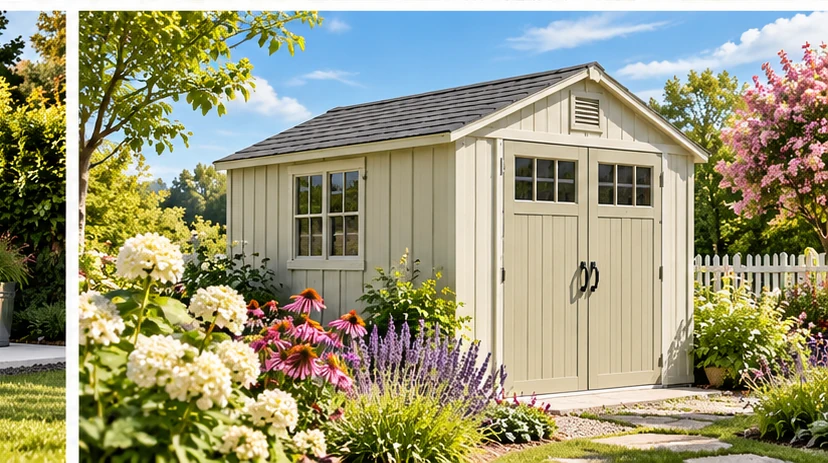
Illustrative editorial photography; not a photograph of any listed retailer product.
A location-first checklist for shed permits, zoning, easements, setbacks, electrical work and inspections. Check current product specifications, local building rules and real delivery costs before buying.
There is no nationwide shed-permit exemption
Search results often summarize a single square-foot threshold as though it applies everywhere. It does not. A structure that needs no ordinary building permit may still be subject to zoning restrictions, floodplain rules, property-line setbacks, HOA agreements or electrical permits. Some cities require approval for every new shed; others exempt certain small, nonoccupied buildings from a construction permit.
For instance, Seattle lists a narrow permit exemption for qualifying small storage structures, while Gaithersburg, Maryland says a residential shed permit is required for all new sheds. Those rules cannot be transferred from one address to another. The right starting point is your city or county's official building department.
Write down six facts before you call
Have your property address, shed footprint, overall roof height, intended use, foundation style and distance from property lines ready. A simple sketch with an arrow to the street, nearby structures and an approximate size is often more useful than a retailer screenshot. Be clear whether the shed will have power, water, heat or people working inside it.
Ask whether zoning and construction reviews are separate; whether a permit exemption still requires setback compliance; and what drawings, anchoring information or inspections apply. Do not assume that a store selling a shed in your state has confirmed its legality on your lot.
Watch for easements and special lots
Utility and drainage easements can affect where a shed can be installed. Corner lots, historic districts, shorelines, wildfire areas, floodplains and homeowner associations may add requirements. Delivery access also matters: cranes or trucks may need permission or a different route when fences and overhead wires are in the way.
If you are unsure of a property line, find the plat or survey rather than eyeballing the fence. A small error can make an otherwise sound installation expensive to correct.
Keep documents with the shed
Save written approvals, site plans, product instructions, foundation records, delivery receipts and warranty documents. Photograph any anchoring before it is concealed. If you later sell the home, a simple folder explaining what was built and how approvals were handled can prevent confusion.
This guide is general information, not legal or engineering advice. Official local rules and the manufacturer's instructions control.
Next steps before you order
- Measure the yard, the object you need to store, and the route through the doorway.
- Compare complete specifications for at least two models—not just exterior style.
- Get the full delivered-and-installed cost, including any foundation and anchoring.
- Check your local building department and any HOA before making irreversible changes.
Ready to narrow the options?
Use the no-sign-up size finder, then compare sellers directly. No retailer is represented as a paid partner before approval.