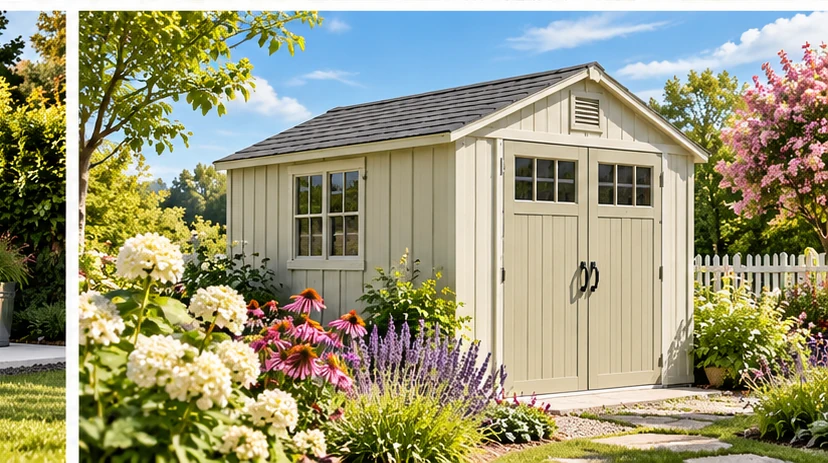
A bike shed has to do more than hold a bicycle diagonally for a product photo. It should let the bikes you use most come out without moving every other bike, protect equipment from prolonged dampness, and provide a sensible lock-up arrangement.
Count handlebars, not just wheels
Two bicycles may fit side by side at the tires while their handlebars collide. Measure each bike at its widest point, including child seats, baskets, racks and mirrors. Sketch how the bikes will enter, turn and park. If you plan to hang bikes vertically, check the wall’s approved mounting capacity and whether the ceiling height and lift effort work for the people using the space.
Pick a retrieval pattern
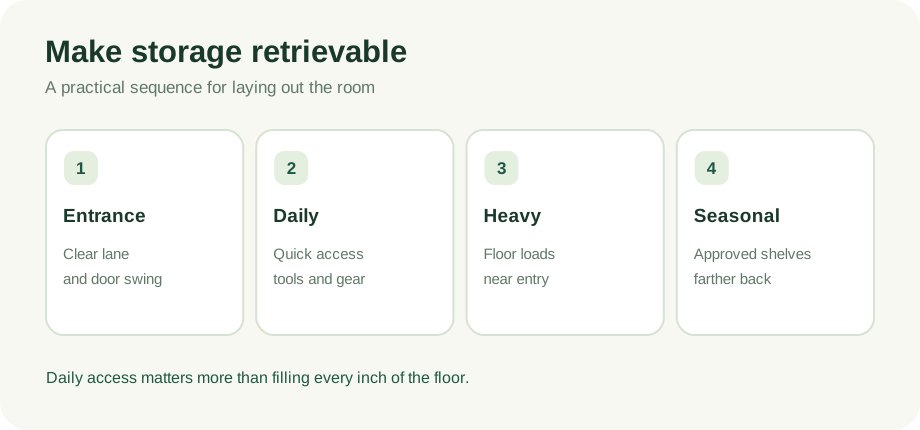
If the household rides daily, quick access matters more than squeezing the maximum number of bikes into the minimum footprint. Place frequently used bikes nearest the opening, and put helmets, pumps and shoes where they do not fall into the aisle. A wider shed can be more useful than a deeper one if it provides a clean path to each bike. Test the arrangement with tape on the floor before purchase.
Make the doorway do the work
Bikes are often maneuvered at an angle, so the width of the actual clear opening is more important than the door photo. Check the threshold and whether you can roll rather than lift. A slight ramp may help, provided the manufacturer permits the setup and the approach is stable. Leave enough outside space to turn the handlebars as you enter.
Think moisture and theft resistance
Dry wet bikes before long-term storage when possible. Keep clothing, cardboard and spare tires away from persistently damp surfaces. For security, assess hinges, locks, door construction and visibility from the home as a system. Depending on the value of the equipment, you may want an independently anchored locking point approved for the structure. Never presume a light shed wall is an adequate anchor for an expensive bicycle.
Compare a bike-specific locker with a general shed
A narrow bicycle locker can suit a small urban yard, but may offer little room for garden supplies. A general shed provides flexibility at the cost of a larger footprint. Choose the smallest option that meets the retrieval pattern you actually want, not simply the smallest model that lists your bike count.
One-bike-at-a-time retrieval test
Draw each bicycle as an actual-width shape and mark the direction its handlebars face. Test removing the middle bicycle without moving the others, because that is often the daily failure point in a crowded shed. If vertical hanging is proposed, ask who will lift the bike and how high it must travel; a clever rack is not useful for a rider who cannot comfortably operate it.
For expensive bicycles, the combination of suitable doors, suitable anchors and visibility from the home usually deserves more thought than a decorative shed style. Compare locks and racks as complete systems rather than isolated accessories.
Buyer / homeowner checklist
- Measure handlebars, baskets and child seats.
- Sketch which bikes need to exit first.
- Check the clear door opening and approach.
- Plan approved rack or anchor mounting.
- Include drying and accessory storage.
Questions to bring to a seller or installer
A useful comparison begins with current written specifications for exact model numbers. Put all contenders in one worksheet and do not replace missing specifications with guesses. A good answer identifies the product, base, and included services, rather than offering a generic sales assurance.
- What are the exact dimensions of the largest item?
- How frequently will it be retrieved?
- Which supports and shelves are rated for the load?
- How will wet gear and access be handled?
For every answer, note the model number, the source of the specification, the date you obtained it, and whether it was confirmed in a current installation manual or supplier quote. This makes the comparison more useful if prices or terms change before you purchase.
Frequently asked questions
How many bikes fit an 8×10 shed?
There is no reliable universal number. Handlebar width, orientation, door location and other stored gear determine usable capacity.
Can a bike shed be completely sealed against humidity?
A fully sealed unconditioned space can trap moisture. Follow the manufacturer’s ventilation guidance and manage wet equipment.
Next step: compare complete specifications
Before committing, place at least two suitable models side by side. Note interior dimensions, actual doorway, floor construction, permitted foundation, anchoring, delivery terms, and warranty exclusions. Where specifications or prices are missing, contact the seller for the current written information. If work involves structural changes, power, or local approvals, consult the appropriate qualified professional.
We have not hands-on tested products or inspected customer installations for this article. Product specifications and applicable building rules must be checked with current manufacturers and local authorities. Retailer links elsewhere on this site are direct links until affiliate approvals are confirmed.
Read our editorial policy ↗