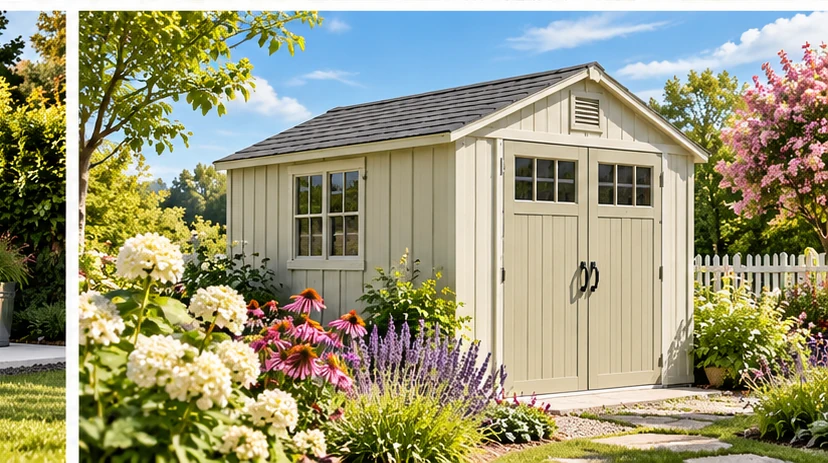
Illustrative editorial photography; not a photograph of any listed retailer product.
Practical advice on condensation, ventilation, locks, visibility and protecting the items you store. Check current product specifications, local building rules and real delivery costs before buying.
Start with water control outside the shed
The best moisture management begins with site selection. Avoid low spots where runoff pools against the walls or underneath the floor. Consider roof drainage, grade, splashback and vegetation touching the structure. If the door faces the prevailing rain, look carefully at threshold design and weather seals.
Condensation can appear even when a roof does not leak. A metal surface can cool quickly, while damp items brought inside raise humidity. Let wet garden tools dry when practical and don't pile cardboard directly against the exterior wall.
Ventilation depends on what is stored
A shed used for bicycles and tools may need a different ventilation approach from a potting shed that regularly contains damp soil. Check whether the manufacturer includes vents and whether they can be kept clear after shelving is installed. Do not arbitrarily cut ventilation openings into a panel system if it would harm strength or void the warranty.
Fuel, chemicals and batteries have their own storage and fire-safety rules. Follow product labels and local guidance; a shed should not become an improvised storage room for incompatible hazardous materials.
Security is a combination of choices
Check door alignment, hasps, hinges and lock placement. A heavy padlock on a flimsy door may not accomplish much. Mounting a shed where it is visible from the home, using motion lighting appropriately and keeping valuable items out of easy view can help discourage casual theft.
Read insurance exclusions for tools, bicycles and detached outbuildings. Some policies have limits, conditions or different deductibles. Make an inventory of high-value items and keep serial numbers where appropriate.
Set a seasonal inspection habit
A short spring and fall inspection is often enough to spot issues before they become expensive. Clear plants from the perimeter, inspect the roof and door seals, look for pooling water, test locks and check fasteners and anchoring. Follow the manufacturer's cleaning schedule.
The objective is simple: keep the contents dry, the building anchored and the doors usable in the weather you actually get.
Next steps before you order
- Measure the yard, the object you need to store, and the route through the doorway.
- Compare complete specifications for at least two models—not just exterior style.
- Get the full delivered-and-installed cost, including any foundation and anchoring.
- Check your local building department and any HOA before making irreversible changes.
Ready to narrow the options?
Use the no-sign-up size finder, then compare sellers directly. No retailer is represented as a paid partner before approval.